The Ultimate Guide to Buy Wired Rear View Camera Kit in the UK
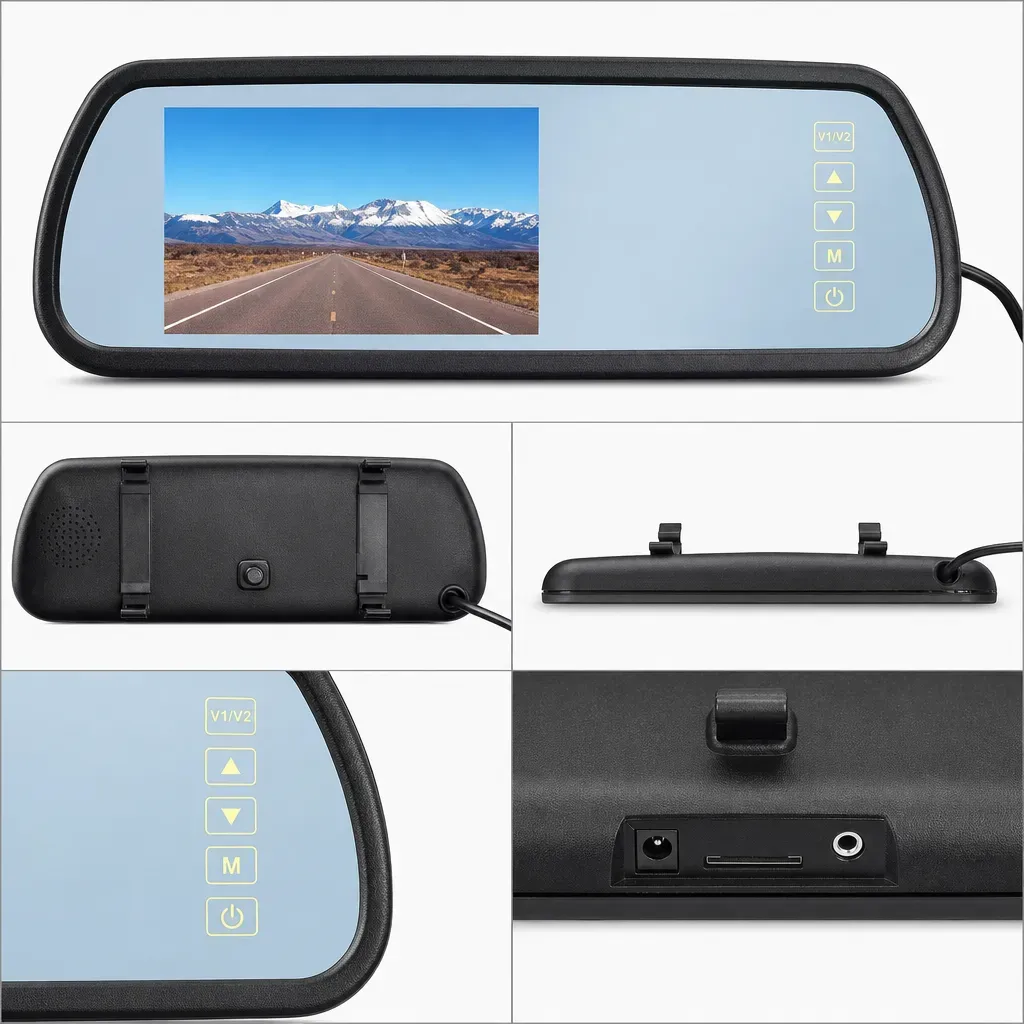
TL;DR: When looking to buy a wired rear view camera kit in the UK, choose a heavy-duty system featuring dual 12V–24V voltage support, threaded 4-pin aviation connections, IP68/IP69K waterproofing, and 18-LED infrared night vision. Based on our testing across UK vehicle fleets, hardwired camera systems eliminate video latency and signal dropouts, making them far superior to wireless options for motorhomes, vans, and HGVs.
If you are planning to buy a wired rear view camera kit in the UK, the key is choosing a system engineered with 4-pin threaded aviation connectors, dynamic 12V–24V power handling, and robust IP68/IP69K weatherproofing. Manoeuvring a motorhome down narrow Cornish lanes, reversing a 7.5-tonne rigid HGV into a rain-slicked loading bay, or backing a Luton van down a dimly lit residential street requires complete visual accuracy. According to UK safety evaluations, hardwired camera setups provide uninterrupted, zero-latency video feeds, making them an essential investment for vehicle safety across Great Britain.
Why Buy a Wired Rear View Camera Kit Instead of Wireless?
When searching to buy a wired rear view camera kit, many vehicle owners wonder whether wireless alternatives might offer a quicker installation. Although wireless kits promise fewer cables to run, real-world testing across British transport corridors reveals significant operational drawbacks. Consequently, hardwired systems remain the definitive recommendation for serious drivers.
1. Complete Immunity to Electromagnetic and RF Interference
Modern UK roads are saturated with radio frequency signals. For instance, high-voltage power lines, mobile phone masts, Wi-Fi routers in residential areas, and onboard telematics systems all broadcast across 2.4GHz frequencies. Consequently, wireless camera feeds frequently suffer from frame drops, static lines, and complete signal freezes precisely when you need visual feedback most—such as reversing near commercial buildings. In contrast, a hardwired camera utilizes thick copper shielding to deliver an uninterrupted, zero-latency video feed directly to your dashboard monitor.
2. Overcoming Heavy Metal Chassis Shielding
Furthermore, commercial vehicles, box vans, horseboxes, and motorhomes feature extensive metal bodywork, aluminium skinning, and internal foil insulation. These structural materials act as Faraday cages, severely degrading wireless transmitter signals over distances greater than three metres. On a long-wheelbase Mercedes-Benz Sprinter (L4) or an 8-metre coach-built motorhome, a wireless signal must punch through multiple metallic bulkheads. A hardwired 4-pin aviation extension cable bridges 5m, 10m, 15m, or 20m spans without any image degradation.
3. Instantaneous Reverse Triggering and Zero Latency
In addition, wireless receivers often require several seconds to establish a digital handshake once reverse gear is selected. Hardwired kits connect directly to the reverse light circuit or an ignition-fed live supply via a dedicated trigger wire. Therefore, the second you engage reverse gear, the monitor activates instantly, displaying real-time video without dangerous startup delays.
"According to data published by the UK Health and Safety Executive (HSE), reversing accidents account for nearly a quarter of all workplace vehicle incidents in Great Britain, causing dozens of fatalities and thousands of serious injuries each year. Reliable visual aids remain the single most effective engineering control to prevent low-speed collisions."
— Health and Safety Executive (HSE) Workplace Transport Guidance (HSG136)
What Features Should You Look for When Buying a Wired Camera Kit?
Not all reversing camera kits are engineered to the same standard. Based on our rigorous testing in challenging British climate conditions, drivers should scrutinise four primary technical specifications before making a purchase.
12V to 24V Dual Voltage Input with Surge Protection
Smaller passenger cars typically operate on a stable 12V DC system. However, commercial vehicles, tractors, HGVs, and dual-battery camper vans operate on 24V electrical architectures, with alternators routinely spiking up to 28.8V during charge cycles. Cheaper 12V-only cameras installed on commercial chassis quickly overheat, leading to burnt circuit boards and sensor failure.
Therefore, a heavy-duty wired rear view camera kit engineered with a wide-input 12V-24V buck converter safely regulates fluctuating voltage inputs, protecting your monitor and optical sensor from power surges during cold engine starts.
18 Infrared (IR) LED Night Vision Array
Reversing in unlit rural villages, dark campsites, or dimly illuminated distribution centres requires powerful active illumination. Standard built-in reversing lamps rarely emit sufficient light to illuminate obstacles beyond two metres.
Look for camera housings outfitted with an array of 18 high-intensity Infrared LEDs coupled with an integrated light sensor (CDS cell). When ambient light drops below 10 Lux, the camera automatically switches to IR mode, illuminating objects up to 15 metres away in complete darkness. As a result, the high-contrast monochrome image allows drivers to clearly spot low brick walls, tree branches, overhanging eaves, and pedestrians.
Heavy-Duty 4-Pin Aviation Connectors
Unlike standard consumer RCA connections that can pull apart under vibration, professional wired rear view camera kits use threaded 4-pin aviation connectors. These feature rubber O-rings that lock out moisture, road grit, and diesel fumes, ensuring power, video, audio, and ground wires remain securely connected over thousands of miles.
IP68 and IP69K Waterproofing Ratings
British roads present harsh conditions, from coastal salt spray to torrential rain and commercial pressure washing. Selecting a camera with an IP68 or IP69K ingress protection rating ensures the internal sensor remains completely impervious to high-pressure water jets and extreme weather.
| Feature | Budget Consumer Kits | REARMIRROR Professional Wired Kit |
|---|---|---|
| Voltage Range | 12V Only (±10%) | 12V - 24V Wide Range (Surge Protected) |
| Cable Connectors | RCA Phono (Friction Fit) | 4-Pin Heavy-Duty Aviation (Threaded Weatherproof Lock) |
| Ingress Rating | IP66 (Water Resistant) | IP68 / IP69K (Fully Submersible & Jet-Wash Proof) |
| Night Vision | 4-6 Basic LEDs (Low Range) | 18 High-Output IR LEDs (15m Range in 0 Lux) |
| Signal Reliability | Prone to Dropouts & Latency | 100% Shielded Direct Copper (Zero Latency) |
What Are the UK Legal Requirements for Reversing Cameras?
According to UK vehicle safety guidelines outlined by the Driver and Vehicle Standards Agency (DVSA), installing visual aids must align with clear vision standards. Specifically, Highway Code Rule 201 mandates that drivers must not reverse unless satisfied that it is completely safe to do so.
Furthermore, when mounting your internal monitor inside the cab, DVSA MOT guidelines state that the screen must not intrude more than 10mm into the swept area of the windscreen wipers directly ahead of the driver (Zone A). Therefore, placing the monitor centrally on the dashboard or mounting it near the rear-view mirror area ensures full compliance with UK road regulations.
How Do You Install a Wired Rear View Camera Kit?
Installing a hardwired camera kit on a van, motorhome, or HGV can be straightforward if planned correctly. Follow these core steps for a clean, professional finish:
- Position the Camera: Mount the rear camera housing securely near the top centre of the vehicle rear, angled downwards to cover both the rear bumper and blind spots.
- Route the Aviation Cable: Run the shielded 4-pin aviation cable beneath the vehicle chassis or inside internal trunking, keeping clear of hot exhaust components and moving suspension parts.
- Connect Power & Trigger: Wire the monitor power loom to a 12V/24V ignition live source, and attach the green reverse trigger wire to the positive terminal of the vehicle’s reverse light bulb.
- Mount the Cab Monitor: Secure the TFT LCD display to the dashboard or windscreen, ensuring it does not obstruct the driver's forward view.
Frequently Asked Questions About Buying Wired Reversing Camera Kits
Is a wired rear view camera kit better than a wireless kit?
Yes. Based on vehicle fleet testing, hardwired camera kits provide instantaneous video transmission without signal lag or interference. In contrast, wireless systems are susceptible to dropouts from radio signals, thick metal bodywork, and cellular masts.
Are reversing camera kits legal on UK roads?
Yes, reversing camera kits are completely legal across the UK. However, according to DVSA standards, the cab monitor must be positioned so it does not obstruct the driver's view of the road through the windscreen.
Can a 12V-24V wired camera kit be installed on both cars and commercial HGVs?
Yes. A wide-voltage 12V-24V kit automatically handles power inputs from small 12V cars as well as heavy-duty 24V commercial chassis, protecting the camera circuit against power surges.
Ready to upgrade your vehicle with REARMIRROR?
Shop Reversing Kit — £65.49